Sunday, August 9, 2009

Asbestos in the home

Arizona Homeowners Taking Caution with Asbestos and Moving GREEN


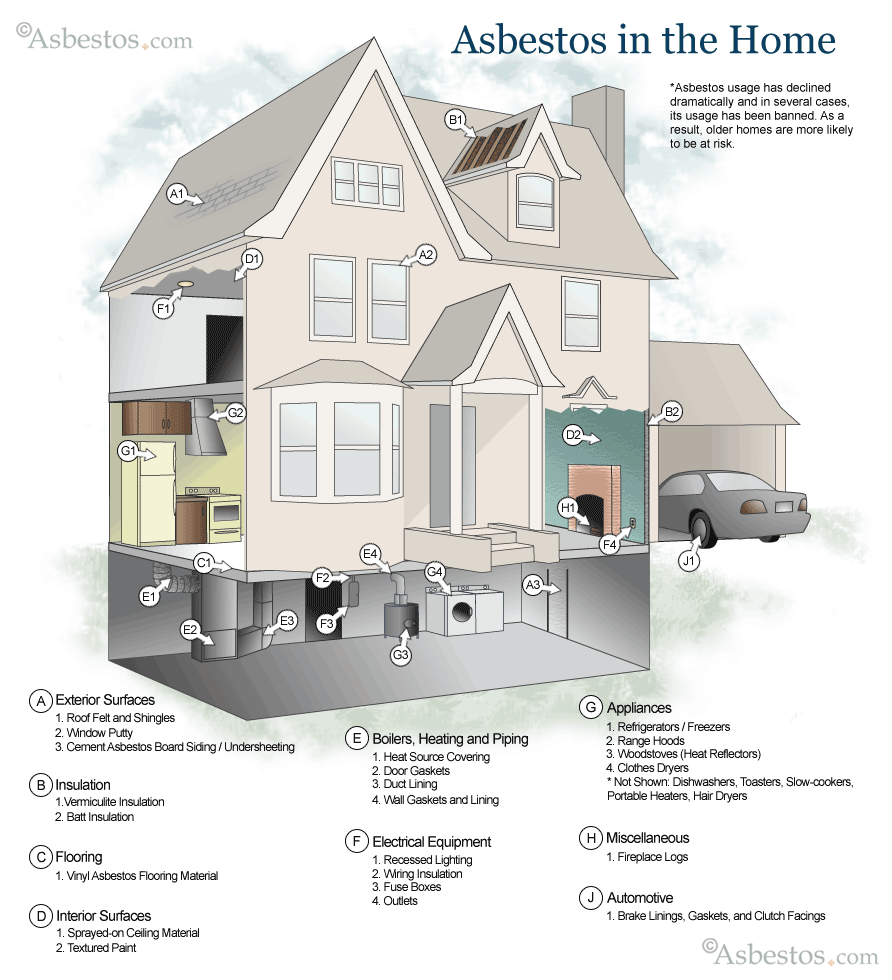
In the Arizona real estate industry, many additional responsibilties may arise when buying a new home. Regarded as an American tradition, the path to homeownership is an exciting time with many rewards. However, there are many things that should be taken into consideration. Gaining popularity more than a century ago, asbestos was used in many industrial and building applications throughout the 20th century due to its fire resistant qualities. Potential Arizona homebuyers or those remodeling older homes should be aware that many homes built before 1980 may still contain asbestos.


This shouldn’t make you frightened because asbestos exposure is easily prevented by taking simple precautions. The Agency for Toxic Substances and Disease Registry stated that a large industry in Arizona is still present because of mines operated by Asbestos Mines, a division of Arizona Asbestos Inc. Now seeking to redefine the way asbestos is handled, the Asbestos Institute is stationed in Phoenix and is one of the largest training facilities for asbestos abatement in the world. There are now many green and healthy alternatives that make the use of asbestos obsolete.


If any asbestos is located in your home, the best advice is to leave it alone. Disturbing asbestos may cause it to become damaged, and release its fibers into the air. The frequent inhalation of asbestos fibers can cause a rare, but severe lung ailment known as peritoneal mesothelioma. With an extremely high amount of asbestos incidents through the last century, many mesothelioma lawyer firms began fighting for victims rights. Asbestos manufacturers were clearly aware of the health damaging qualities involved with their product, but chose to cover it up, leaving millions of workers, military personnel and civilians exposed to the material.


If a home inspector deems the asbestos harmful, removal must be undertaken by a licensed abatement contractor. These contractors are trained in the handling and disposal of asbestos in public facilities and homes. The Arizona Department of Environmental Quality is committed to protecting the public from asbestos-containing materials by educating and assisting with asbestos removal, transport and disposal.

Once the removal process is completed, green insulation alternatives should be given serious consideration. A water based spray polyurethane foam, lcynene features no toxic components. Statistics show that the lcynene foam, for example, can cut energy costs by about 25 percent annually, according to studies done by manufacturers.

Although needed to be removed by professionals, it is worth price for a healthier, positive lifestyle. With the help of ADEQ and other organizations, removal in work places and public facilities is on the rise. These asbestos alternatives allow for a clean, healthy home, free of health damaging materials.


Saturday, August 1, 2009

August Newsletter


Marie Zubkoff
REALTOR(R)
US Preferred Realty
(480)233-7051
MarieZubkoff@cox.net
www.YourGilbertHome.com


Great Grilling!

The second summer heats up so do the charcoals. To ensure your grilling stays catastrophe-free, follow these simple safety precautions.


Wash, Wash, Wash Your Hands
(as in Row, Row, Row Your Boat)
Always, wash your hands with hot, soapy water before and after handling food.


Marinating Mandate

When marinating for long periods of time, it is important to keep foods refrigerated. Don't use sauce that was used to marinate raw meat or poultry on cooked food. Boil used marinade before applying to cooked food.


Hot, Hot, Hot

When grilling foods, preheat the coals on your grill for 20 to 30 minutes, or until the coals are lightly coated with ash.


Temperature Gauge

Use a meat thermometer to insure that food reaches a safe internal temperature.


Where's the Beef? Chicken and Fish?

Hamburgers should be cooked to 160º F, while large cuts of beef such as roasts and steaks may be cooked to 145º F for medium rare or to 160º F for medium. Cook ground poultry to 165° F and poultry parts to 170° F. Fish should be opaque and flake easily.


Stay Away from that Same Old Plate

When taking foods off the grill, do not put cooked food items back on the same plate that previously held raw food.


Source: http://www.cdc.gov/foodsafety/grill.htm


Beat the heat with these cool summer activities

Pool time

Nothing says summer like a swimming pool. Hit up public pools around your neighborhood, join the local YMCA or gym with a large pool. Or if you have a little more money to splurge, join your community’s country club. While weekend trips to the pool are essential, an after dinner dip is always a great way to end the day.


Beat boredom with a book club

When the thermostat reaches sky-high temperatures, outside activities can be exhausting- not to mention H-O-T. Cure the heat-wave blues with a book club. Get together with friends and choose a great summer book that you all agree on.


Host book club parties at each other’s houses – have everyone bring cool summer treats and drinks. Have kids? Get them involved! Choose a fun summer reading list. Not only will it get them away from the T.V. and video games, reading might keep the constant barrage of “I’m bored” at bay.


Get your summer history lesson

Make history fun – take a trip to a history, science or art museum. Take advantage of summer deals and new art gallery openings.


See summer’s biggest blockbusters

Another way to ensure you stay cool is to hit up the movie theater! Summer blockbusters are some of the year’s best movies. Don’t forget the popcorn!


Arts & Crafts

Remember that room you’ve been meaning to repaint or redecorate – make it your summer project. Start a scrapbook to preserve your summertime memories. If you have younger ones to entertain – choose a fun arts & crafts project for all ages.
Visit Websites such as http://familyfun.go.com/ or http://www.parenting.com/ for super summer craft ideas.


The bottom-line basics of short sales


Due to several economic conditions:

rising unemployment, a fall in home prices and an

increase
in the amount of homeowners unable to
pay

their
mortgages – many homes are falling into

a new category called short sales.


Here are some FAQ’s on short sales that every potential buyer or seller should know:


What is a short sale?

According to the National Association of REALTORS® a short sale is defined as “a transaction in which the lender, or lenders, agree to accept less than the mortgage amount owed by the current homeowner.” In other words, a short sale occurs when the homeowner owes more on the home than it is worth.


How is a short sale different from foreclosure?

Foreclosure is the process in which the property is seized by the lending institution. A foreclosure occurs when a homeowner defaults on the loan that they are unable to pay due to deteriorating finances. The process of foreclosure varies from state to state, but generally begins with a Notice of Default issued by the lending institution after the homeowner has been 3 months delinquent on a mortgage payment. To avoid a foreclosure, which dramatically reduces a homeowners FICO credit score, many homeowners will attempt to sell their property as a short sale.


How does a homeowner qualify for a short sale?

The homeowner must have financial proof that they are upside down on the mortgage. They must demonstrate a financial hardship and prove their insolvency. This includes W-2 forms from the employer, bank statements, two years of tax returns, and other paperwork indicating income and debt obligations.


Are there disadvantages to a short sale?

Yes. Your credit score will be reduced by up to 200 points once reported to the credit bureau. The short sale process is long and arduous and many sellers’ submissions for short sales are declined by the lending institutions due to lack of proof of financial distress. Keep in mind that because of current economic conditions and the amount of distressed properties flooding the market, lenders are incurring a very large inventory. They are scrutinizing every short sale submission for any reason to deny the request.


Are there advantages to a short sale?

The simple answer is yes. Short sales are almost always a better option over foreclosure. First, you avoid having your home seized by a lending institution and second, you preserve most of your credit score. For buyers, a short sale could be a great opportunity to purchase a bigger home for less money. Be aware, though, the process of purchasing a short sale is generally more difficult and takes longer than a traditional home.


This information is only a brief overview of a short sale. Whether you are buying or selling, if you think a short sale might be an option for you, know the advantages and disadvantages of a short sale and get with a REALTOR® immediately to explore your options. For more information on short sales, visit www.realtor.org.


Source: www.realtor.org


MLS2.jpg If you are currently working with another Broker please do not consider this a solicitation. EHO.jpg

Followers

About Me

My photo
A REALTOR in Arizona, Maricopa and Pinal counnties which include cities stretching from Queen Creek, to Buckeye and Casa Grande to North Scottsdale. I work with many distressed properties and I also assist and work as a negotiator for other agents who are not proficient in short sales and working with distressed properties.